RAB7A
RAB7A is a member of the RAS oncogene family and is a key regulator in the endocytic pathway. It is involved in the late stages of endocytosis, which is the process by which cells absorb molecules by engulfing them. RAB7A is also associated with various diseases, including Charcot-Marie-Tooth disease and some forms of cancer.
Function[edit]
RAB7A is a small GTPase that controls transport to late endocytic compartments such as late endosomes and lysosomes. It is involved in the biogenesis of lysosomes, the regulation of autophagy, and the promotion of apoptosis. RAB7A also plays a role in the maturation of phagosomes, which are vesicles formed around a particle absorbed by a cell during phagocytosis.
Clinical Significance[edit]
Mutations in the RAB7A gene have been associated with Charcot-Marie-Tooth disease type 2B, a peripheral neuropathy. In addition, RAB7A has been implicated in cancer progression and metastasis, particularly in breast cancer and colorectal cancer.
Interactions[edit]
RAB7A has been shown to interact with a number of proteins, including RILP, Rabring7, and ORP1L. These interactions are crucial for the function of RAB7A in the endocytic pathway.
See Also[edit]
References[edit]
 | This protein-related article is a stub. You can help WikiMD by expanding the page. |
RAB7A gallery[edit]
-
 Endocytic pathway of animal cells showing EGF receptors, transferrin receptors and mannose-6-phosphate receptors
 -
 RAB7A location
 -
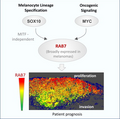 Soxmyc
 -
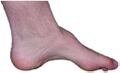 Charcot-marie-tooth foot


Medical Disclaimer: WikiMD is for informational purposes only and is not a substitute for professional medical advice. Content may be inaccurate or outdated and should not be used for diagnosis or treatment. Always consult your healthcare provider for medical decisions. Verify information with trusted sources such as CDC.gov and NIH.gov. By using this site, you agree that WikiMD is not liable for any outcomes related to its content. See full disclaimer.
Credits:Most images are courtesy of Wikimedia commons, and templates, categories Wikipedia, licensed under CC BY SA or similar.
Translate page: - East Asian
中文,
日本,
한국어,
South Asian
हिन्दी,
தமிழ்,
తెలుగు,
Urdu,
ಕನ್ನಡ,
Southeast Asian
Indonesian,
Vietnamese,
Thai,
မြန်မာဘာသာ,
বাংলা
European
español,
Deutsch,
français,
Greek,
português do Brasil,
polski,
română,
русский,
Nederlands,
norsk,
svenska,
suomi,
Italian
Middle Eastern & African
عربى,
Turkish,
Persian,
Hebrew,
Afrikaans,
isiZulu,
Kiswahili,
Other
Bulgarian,
Hungarian,
Czech,
Swedish,
മലയാളം,
मराठी,
ਪੰਜਾਬੀ,
ગુજરાતી,
Portuguese,
Ukrainian

