Raksi
Raksi (also known as Rakshi, Rakxi or Rakshi Bhaat) is a traditional distilled alcoholic beverage in Nepal and Tibet. It is often made at home.
History[edit]
The history of Raksi is deeply intertwined with the history of Nepal and Tibet. It has been consumed for centuries in these regions, and is often associated with religious rituals and social events.
Production[edit]
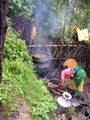
Raksi is typically made from rice, but can also be made from millet, barley, or fruit. The process involves fermenting the base ingredient with yeast and water, then distilling the mixture to increase its alcohol content. The distillation process is often done in a traditional pot still.
Consumption[edit]
Raksi is typically consumed neat, but can also be mixed with water or other beverages. It is often served in small clay cups, and is traditionally consumed during meals, festivals, and social gatherings.
Cultural significance[edit]
Raksi holds a significant place in the cultures of Nepal and Tibet. It is often used in religious rituals, and is a common offering to deities. It is also a popular beverage during festivals and social events.
Health effects[edit]
Like all alcoholic beverages, Raksi can have both positive and negative health effects. Moderate consumption can have a relaxing effect and may have some health benefits, but excessive consumption can lead to alcoholism and other health problems.
Legal status[edit]
The production and sale of Raksi is legal in Nepal and Tibet, but it is often made and consumed at home. In other countries, the legal status of Raksi may vary.
See also[edit]
| Distilled beverages | ||||||||
|---|---|---|---|---|---|---|---|---|
This distilled beverage related article is a stub.
|
| Nepalese cuisine | ||||||||||
|---|---|---|---|---|---|---|---|---|---|---|
This Nepalese cuisine related article is a stub.
|
| Tibetan cuisine | ||||||||
|---|---|---|---|---|---|---|---|---|
This Tibetan cuisine-related article is a stub. You can help WikiMD by expanding it.
|

-
Raksi
-
 Raksi
Raksi -
 Raksi
Raksi


Medical Disclaimer: WikiMD is for informational purposes only and is not a substitute for professional medical advice. Content may be inaccurate or outdated and should not be used for diagnosis or treatment. Always consult your healthcare provider for medical decisions. Verify information with trusted sources such as CDC.gov and NIH.gov. By using this site, you agree that WikiMD is not liable for any outcomes related to its content. See full disclaimer.
Credits:Most images are courtesy of Wikimedia commons, and templates, categories Wikipedia, licensed under CC BY SA or similar.
Translate page: - East Asian
中文,
日本,
한국어,
South Asian
हिन्दी,
தமிழ்,
తెలుగు,
Urdu,
ಕನ್ನಡ,
Southeast Asian
Indonesian,
Vietnamese,
Thai,
မြန်မာဘာသာ,
বাংলা
European
español,
Deutsch,
français,
Greek,
português do Brasil,
polski,
română,
русский,
Nederlands,
norsk,
svenska,
suomi,
Italian
Middle Eastern & African
عربى,
Turkish,
Persian,
Hebrew,
Afrikaans,
isiZulu,
Kiswahili,
Other
Bulgarian,
Hungarian,
Czech,
Swedish,
മലയാളം,
मराठी,
ਪੰਜਾਬੀ,
ગુજરાતી,
Portuguese,
Ukrainian


