Cerebral venous sinus thrombosis

Editor-In-Chief: Prab R Tumpati, MD
Obesity, Sleep & Internal medicine
Founder, WikiMD Wellnesspedia &
W8MD's weight loss doctor NYC
Philadelphia GLP-1 weight loss and GLP-1 clinic NYC
| Cerebral venous sinus thrombosis | |
|---|---|

| |
| Synonyms | Cerebral venous and sinus thrombosis, CVST |
| Pronounce | N/A |
| Specialty | N/A |
| Symptoms | Headache, seizures, focal neurological deficits, altered mental status |
| Complications | Intracerebral hemorrhage, venous infarction |
| Onset | Can occur at any age |
| Duration | Varies |
| Types | N/A |
| Causes | Thrombosis of the dural venous sinuses |
| Risks | Pregnancy, oral contraceptive use, coagulation disorders, dehydration, infection |
| Diagnosis | MRI, MRV, CT |
| Differential diagnosis | Ischemic stroke, intracerebral hemorrhage, meningitis |
| Prevention | N/A |
| Treatment | Anticoagulation, thrombolysis, surgery |
| Medication | N/A |
| Prognosis | Variable; depends on severity and treatment |
| Frequency | Rare |
| Deaths | N/A |
Cerebral venous sinus thrombosis (CVST) is a type of stroke that results from a blood clot in the dural venous sinuses, which drain blood from the brain. Symptoms may include headache, abnormal vision, any of the symptoms of stroke such as weakness of the face and limbs on one side of the body, and seizures.
Causes[edit]
The most common causes of CVST are conditions that cause the blood to clot more easily than normal, such as antiphospholipid syndrome, pregnancy, Factor V Leiden, and the use of birth control pills. Other risk factors include head injury, infection, and dehydration.
Diagnosis[edit]
Diagnosis is usually by medical imaging, such as a CT scan or MRI of the brain, often followed by a venogram of the veins. A lumbar puncture may also be performed.
Treatment[edit]
Treatment is with anticoagulants (medications that prevent further clots from forming), and occasionally thrombolysis (medications that dissolve clots). In severe cases, surgery may be required to remove the clot.
Prognosis[edit]
The prognosis of CVST is generally good, with most people recovering completely. However, some may have long-term neurological problems.
Gallery[edit]
-
Sagittal sinus thrombus
-
Dural venous sinus thrombosis
-
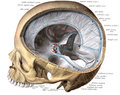 Cerebral venous sinus thrombosis

See also[edit]
References[edit]
 | This medical article is a stub. You can help WikiMD by expanding the page. |

Medical Disclaimer: WikiMD is for informational purposes only and is not a substitute for professional medical advice. Content may be inaccurate or outdated and should not be used for diagnosis or treatment. Always consult your healthcare provider for medical decisions. Verify information with trusted sources such as CDC.gov and NIH.gov. By using this site, you agree that WikiMD is not liable for any outcomes related to its content. See full disclaimer.
Credits:Most images are courtesy of Wikimedia commons, and templates, categories Wikipedia, licensed under CC BY SA or similar.
Translate page: - East Asian
中文,
日本,
한국어,
South Asian
हिन्दी,
தமிழ்,
తెలుగు,
Urdu,
ಕನ್ನಡ,
Southeast Asian
Indonesian,
Vietnamese,
Thai,
မြန်မာဘာသာ,
বাংলা
European
español,
Deutsch,
français,
Greek,
português do Brasil,
polski,
română,
русский,
Nederlands,
norsk,
svenska,
suomi,
Italian
Middle Eastern & African
عربى,
Turkish,
Persian,
Hebrew,
Afrikaans,
isiZulu,
Kiswahili,
Other
Bulgarian,
Hungarian,
Czech,
Swedish,
മലയാളം,
मराठी,
ਪੰਜਾਬੀ,
ગુજરાતી,
Portuguese,
Ukrainian


