Vestibulocochlear nerve
Vestibulocochlear nerve is the eighth of twelve paired cranial nerves. It is responsible for transmitting sound and equilibrium (balance) information from the inner ear to the brain. The vestibulocochlear nerve is divided into two large divisions: the cochlear nerve and the vestibular nerve. The cochlear nerve carries information about hearing, and the vestibular nerve carries information about balance.
Anatomy[edit]
The vestibulocochlear nerve is composed of two distinct parts: the cochlear nerve and the vestibular nerve. The cochlear nerve arises from the spiral ganglion of the cochlea and is concerned with hearing. The vestibular nerve arises from the vestibular ganglia (Scarpa's ganglion) and is concerned with balance.
Function[edit]
The vestibulocochlear nerve carries two types of sensory information from the organs of the inner ear to the brain: auditory (sound) and vestibular (balance). The cochlear nerve carries auditory sensory information from the cochlea of the inner ear directly to the cochlear nuclei in the brainstem. The vestibular nerve carries balance sensory information from the semicircular canals, utricle, and saccule of the inner ear to the vestibular nuclei in the brainstem.
Clinical significance[edit]
Damage to the vestibulocochlear nerve can result in deafness, tinnitus, dizziness, vertigo, nausea, and loss of balance, depending on the extent and location of the damage.
See also[edit]
References[edit]
| The cranial nerves | ||||||||||
|---|---|---|---|---|---|---|---|---|---|---|
|
| Anatomy of hearing and balance | ||||||||||||||||||||||||||||
|---|---|---|---|---|---|---|---|---|---|---|---|---|---|---|---|---|---|---|---|---|---|---|---|---|---|---|---|---|
|
| Anatomy of hearing and balance | ||||||||||||||||||||||||||||
|---|---|---|---|---|---|---|---|---|---|---|---|---|---|---|---|---|---|---|---|---|---|---|---|---|---|---|---|---|
|

This WikiMD article can only be edited by registered and verified editors. You can log in or register.
Vestibulocochlear_nerve[edit]
-
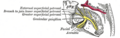 Vestibulocochlear nerve anatomy
 -
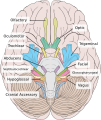 Inferior view of the human brain with labels
 -
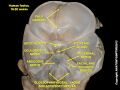 Cranial endobasis of a 19-20 weeks foetus
 -
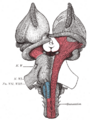 Vestibulocochlear nerve pathway
 -
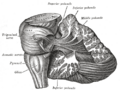 Vestibulocochlear nerve and surrounding structures
 -
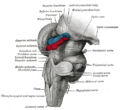 Vestibulocochlear nerve connections
 -
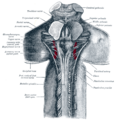 Vestibulocochlear nerve in the brain
 -
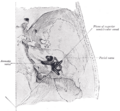 Vestibulocochlear nerve and cranial nerves
 -
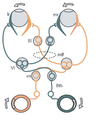 Three neuron arc related to vestibulocochlear nerve
 -
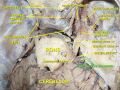 Vestibulocochlear nerve slide


Medical Disclaimer: WikiMD is for informational purposes only and is not a substitute for professional medical advice. Content may be inaccurate or outdated and should not be used for diagnosis or treatment. Always consult your healthcare provider for medical decisions. Verify information with trusted sources such as CDC.gov and NIH.gov. By using this site, you agree that WikiMD is not liable for any outcomes related to its content. See full disclaimer.
Credits:Most images are courtesy of Wikimedia commons, and templates, categories Wikipedia, licensed under CC BY SA or similar.
Translate page: - East Asian
中文,
日本,
한국어,
South Asian
हिन्दी,
தமிழ்,
తెలుగు,
Urdu,
ಕನ್ನಡ,
Southeast Asian
Indonesian,
Vietnamese,
Thai,
မြန်မာဘာသာ,
বাংলা
European
español,
Deutsch,
français,
Greek,
português do Brasil,
polski,
română,
русский,
Nederlands,
norsk,
svenska,
suomi,
Italian
Middle Eastern & African
عربى,
Turkish,
Persian,
Hebrew,
Afrikaans,
isiZulu,
Kiswahili,
Other
Bulgarian,
Hungarian,
Czech,
Swedish,
മലയാളം,
मराठी,
ਪੰਜਾਬੀ,
ગુજરાતી,
Portuguese,
Ukrainian

