Apigenin
-
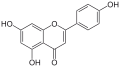 Structure of Apigenin
 -
3D ball model of Apigenin

Apigenin[edit]
Apigenin is a naturally occurring flavonoid that is found in a variety of plants, including parsley, celery, chamomile, and oranges. It is known for its potential health benefits and is the subject of ongoing research in the fields of nutrition and medicine.
Chemical Structure[edit]
Apigenin is classified as a flavone, a type of flavonoid. Its chemical structure is characterized by a 15-carbon skeleton that consists of two phenyl rings and a heterocyclic ring. The molecular formula of apigenin is C15H10O5.
Sources[edit]
Apigenin is abundant in several dietary sources:
These sources are commonly consumed in various cuisines and herbal medicines.
Biological Activities[edit]
Apigenin has been studied for its potential antioxidant, anti-inflammatory, and anticancer properties. It is believed to exert these effects through various biochemical pathways:
- Antioxidant Activity: Apigenin can scavenge free radicals and reduce oxidative stress in cells.
- Anti-inflammatory Effects: It may inhibit the production of pro-inflammatory cytokines and enzymes such as cyclooxygenase and lipoxygenase.
- Anticancer Potential: Apigenin has been shown to induce apoptosis in certain cancer cell lines and inhibit tumor growth in animal models.
Potential Health Benefits[edit]
The consumption of apigenin-rich foods may contribute to various health benefits, including:
- Cardiovascular Health: By reducing oxidative stress and inflammation, apigenin may support heart health.
- Cancer Prevention: Its potential to inhibit cancer cell growth makes it a subject of interest in oncology.
- Neurological Health: Apigenin may have neuroprotective effects, potentially benefiting conditions like Alzheimer's disease.
Safety and Toxicity[edit]
Apigenin is generally considered safe when consumed as part of a regular diet. However, high doses, such as those found in supplements, should be approached with caution, and further research is needed to fully understand its long-term effects.
Related Pages[edit]
| Types of flavonoids | ||||||||||||||||||||||||||||||||||||||
|---|---|---|---|---|---|---|---|---|---|---|---|---|---|---|---|---|---|---|---|---|---|---|---|---|---|---|---|---|---|---|---|---|---|---|---|---|---|---|
|

Medical Disclaimer: WikiMD is for informational purposes only and is not a substitute for professional medical advice. Content may be inaccurate or outdated and should not be used for diagnosis or treatment. Always consult your healthcare provider for medical decisions. Verify information with trusted sources such as CDC.gov and NIH.gov. By using this site, you agree that WikiMD is not liable for any outcomes related to its content. See full disclaimer.
Credits:Most images are courtesy of Wikimedia commons, and templates, categories Wikipedia, licensed under CC BY SA or similar.
Translate page: - East Asian
中文,
日本,
한국어,
South Asian
हिन्दी,
தமிழ்,
తెలుగు,
Urdu,
ಕನ್ನಡ,
Southeast Asian
Indonesian,
Vietnamese,
Thai,
မြန်မာဘာသာ,
বাংলা
European
español,
Deutsch,
français,
Greek,
português do Brasil,
polski,
română,
русский,
Nederlands,
norsk,
svenska,
suomi,
Italian
Middle Eastern & African
عربى,
Turkish,
Persian,
Hebrew,
Afrikaans,
isiZulu,
Kiswahili,
Other
Bulgarian,
Hungarian,
Czech,
Swedish,
മലയാളം,
मराठी,
ਪੰਜਾਬੀ,
ગુજરાતી,
Portuguese,
Ukrainian


